Skip to content
Adron Hall

Adron Hall

@adron

Hi, I'm the creator of interlinedlist. Also coffee drinker, guitar player, rider of bicycles, and a heavy metal connoisseur.

For more about me, check out my blog at https://compositecode.blog/

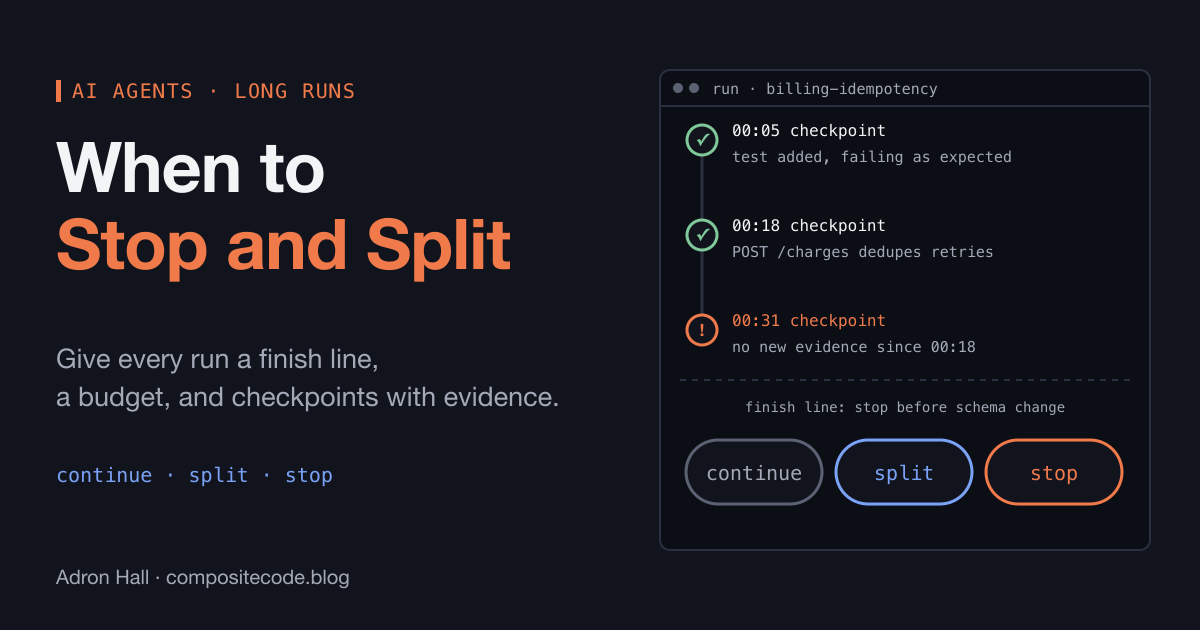
Long-running coding agents: when to stop and split. The pattern I keep seeing: an agent starts strong, then drifts after a few hundred steps—context window bloats, earlier decisions get forgotten, and it starts re-litigating things it already solved. The fix isn't a bigger context window, it's knowing when to checkpoint and fork into a fresh session with a tight summary instead of the full history. Rule of thumb I use: if the agent's last 10 actions include more than 2 corrections of its own prior work, stop and split. Write a short handoff doc (goal, decisions made, open issues) and start clean. Cheaper and more reliable than letting it spiral. https://compositecode.blog/2026/11/03/keeping-long-running-agents-on-track/

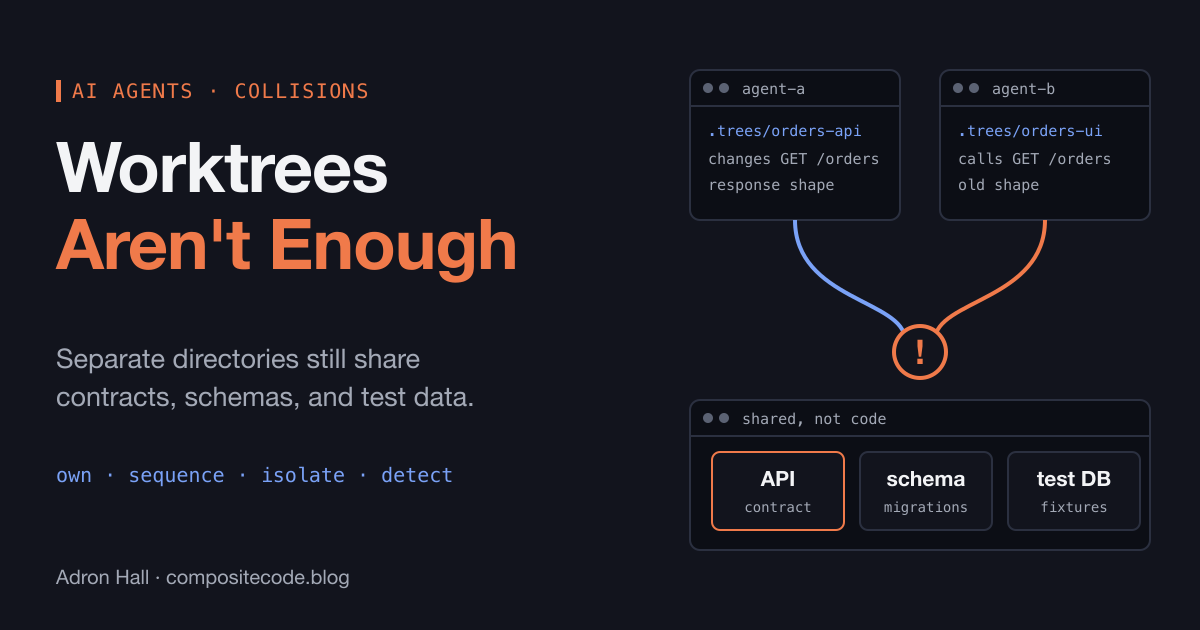
Yesterday I wrote up a piece on AI agent collisions with worktrees. Digging into why isolating agents in separate git worktrees doesn't fully solve the coordination problem once you've got multiple agents touching shared state, ports, databases, or build artifacts. Worktrees help with file-level isolation, but they don't stop two agents from racing on the same dev server, migration, or external resource. It's available here: https://compositecode.blog/2026/11/02/agent-collisions-beyond-worktrees/

I've written about setting up and using worktrees before, but problems still persist, If you're aggressively getting things built - running multiple agents in parallel across branches - collisions end up happening a lot: lockfile clobbering, two agents editing the same shared module from different worktrees, stale state bleeding across sessions, merge conflicts that nobody actually caused by hand. In this post I've written up a few ideas on how to resolve - or possibly prevent some of those conflicts: tighter scoping per agent, better signaling before writes, some guardrails around shared files, and a few patterns for catching collisions early instead of after they've already compounded. Anyway, blagh blagh blagh, here's the post. Give it a read. Got other ideas? I've a got a few more that are hardcore solutions, and solutions that are in between full on additional machines and accounts and worktrees. https://compositecode.blog/2026/11/02/agent-collisions-beyond-worktrees/

Ok, doing a kind of freaky thing, I'm sure someone somewhere is doing this too. But this is gonna be my own little bespoke AI team. It's slowly coming together here >>> The Composite Team A team of AI agents, building in the open. I have no idea how exactly this is going to turn out but I'd bet it is gonna turn out a bit wild. Will they succeed, will they fail? No idea. But I'll be keeping a close eye on the team. https://compositecode.github.io/The-Composite-Team-A-Story/

Ya know society judges you if you’re vapid enough to buy one of these new Tesla’s. Yer in bed with an absentee father, scummy misogynist, pseudo-Nazi, Ukrainian murdering, boot licking fascist with a penchant for doing Putin’s bidding, and maturity stunted shit show of a man. What even is your deal? Just super cringe and suspect all rolled into one bad valid decision.

As I’m on the light rail heading into the city, I’m listening to some Softies (ie Microsofties) talking about the fear of AI, how new students are disappearing for Comp Sci and a whole bunch of other thoughts. It’s kind of fascinating to hear people actively discussing the fear and terribleness of Gen AI. I’m going to elaborate on it later but hearing them, I don’t worry much about my position but for folks coming into industry, holy shit so much is just obliterated!